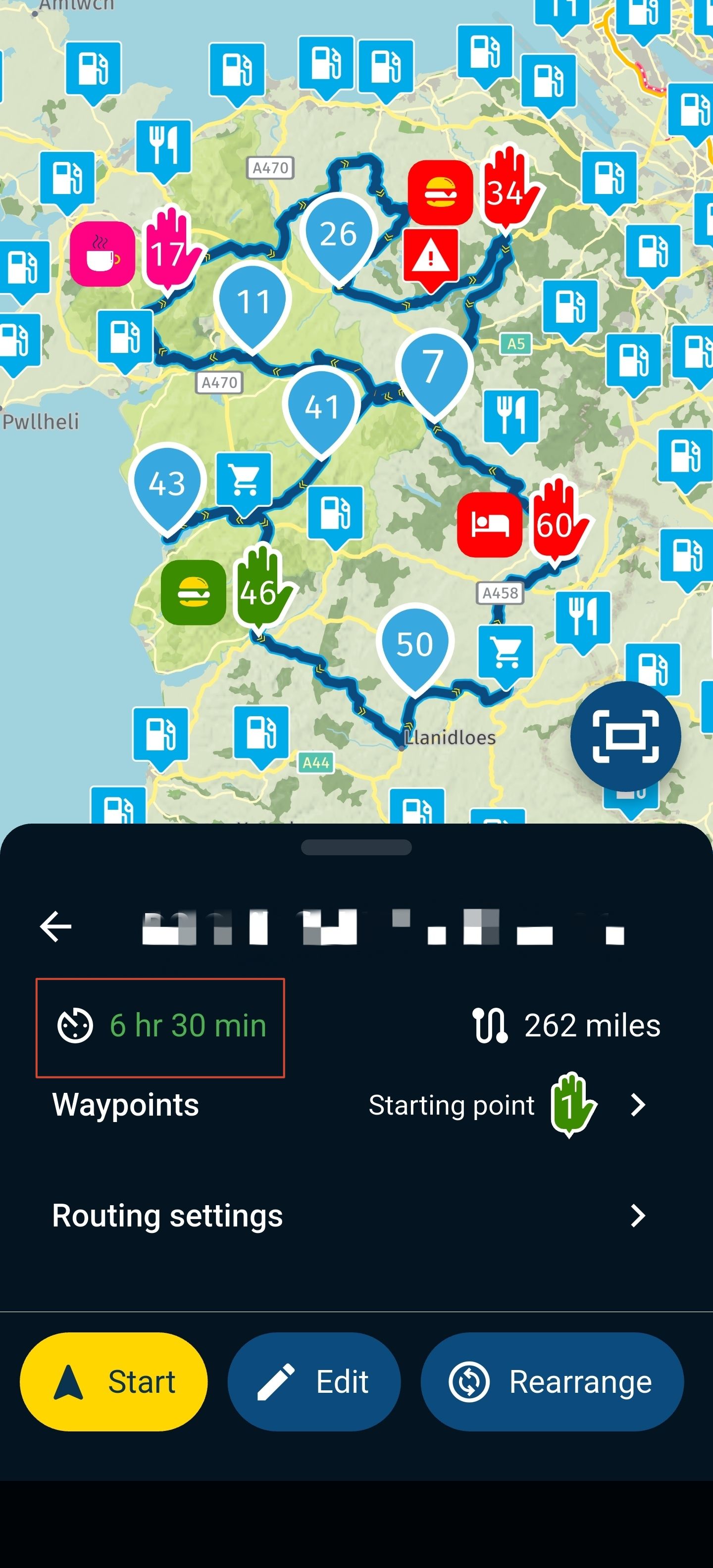
Why does route change when connecting to Android Auto?
-

Using here maps only is no guarantee that the navigation comes with the same route as what you crafted in the planner. At least that is what I have observed. Dont know where the problem is. Could it be that planner and navigation are not using the same user settings? Differences between the routing engine in the app and on the server?
-
Using here maps only is no guarantee that the navigation comes with the same route as what you crafted in the planner. At least that is what I have observed. Dont know where the problem is. Could it be that planner and navigation are not using the same user settings? Differences between the routing engine in the app and on the server?

@Herman-Veldhuizen Or maybe you should use more route points at critical locations! I use as few as possible, but as many as necessary...

-
Using here maps only is no guarantee that the navigation comes with the same route as what you crafted in the planner. At least that is what I have observed. Dont know where the problem is. Could it be that planner and navigation are not using the same user settings? Differences between the routing engine in the app and on the server?

Could it be that planner and navigation are not using the same user settings?
No, theoretically not, since the avoidance settings in the planner replicate to the app along with the route. There can be differences in map-versions though, and also of course in trafic information.
-
Als ik de knop start indruk van de route dan verschijnt er een popup schermpje met de tekst; 'TomTom route Track navigatie gebruiken'
Wat betekend dit???
Als ik de knop start indruk van de route dan verschijnt er een popup schermpje met de tekst; 'TomTom route Track navigatie gebruiken'
Wat betekend dit???Please try to adhere to the language in the opening topic.
The message indicates that the route was planned on the TomTom map, and therefore will be navigated as a track instead of a route. -
Could it be that planner and navigation are not using the same user settings?
No, theoretically not, since the avoidance settings in the planner replicate to the app along with the route. There can be differences in map-versions though, and also of course in trafic information.
@Con-Hennekens There are more settings. The functional navigation settings in the profile.
What I observe is that when I navigate a route as track, a closure can be ignored, but only when I navigate from the opening page of the route. When I navigate from the in-app route editor the closure is not ignored.
In areas with few roads, like here in Norway, a closure of a road can have a big impact. So what the app navigation comes up with can be very different to what you crafted in the in app editor, all with the same type of maps. -
@Con-Hennekens There are more settings. The functional navigation settings in the profile.
What I observe is that when I navigate a route as track, a closure can be ignored, but only when I navigate from the opening page of the route. When I navigate from the in-app route editor the closure is not ignored.
In areas with few roads, like here in Norway, a closure of a road can have a big impact. So what the app navigation comes up with can be very different to what you crafted in the in app editor, all with the same type of maps.
@Herman-Veldhuizen, I was merely referring to @atse-kroes addition.
To answer your comment, I think when you open a route in the app-planner, and the detour is already shown there, that becomes the new "original calculation" of the route.I am just an enthusiastic MRA user, and hope you will be one too!
Most motorcycle problems are caused by the nut that connects the handlebar to the saddle.
Check out RideSleepRepeat.eu, a biker community for sharing stays across Europe
-
@Herman-Veldhuizen, I was merely referring to @atse-kroes addition.
To answer your comment, I think when you open a route in the app-planner, and the detour is already shown there, that becomes the new "original calculation" of the route.
@Con-Hennekens not sure what you mean, but all what I am after is consistency. Ignoring closures might be the right thing to do but then i would like to see the same in the in-app route editor, without having to sprinkle my route with waypoints which don't represent anything and without having to change some settings between editing and navigating. The in-app editor is the only editor I ever use.
The images below illustrate the issue.
The first one shows my mini test route in the editor.
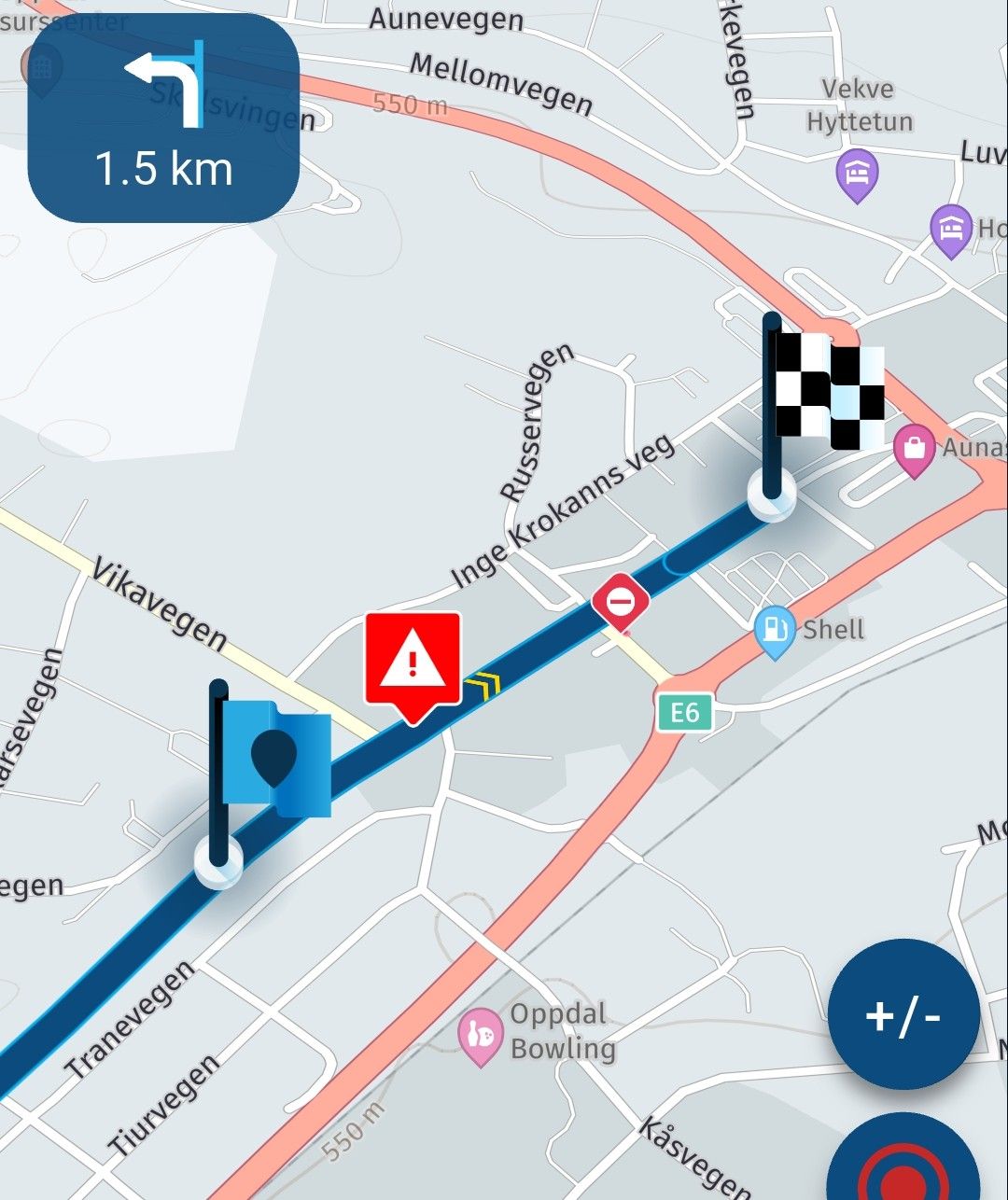
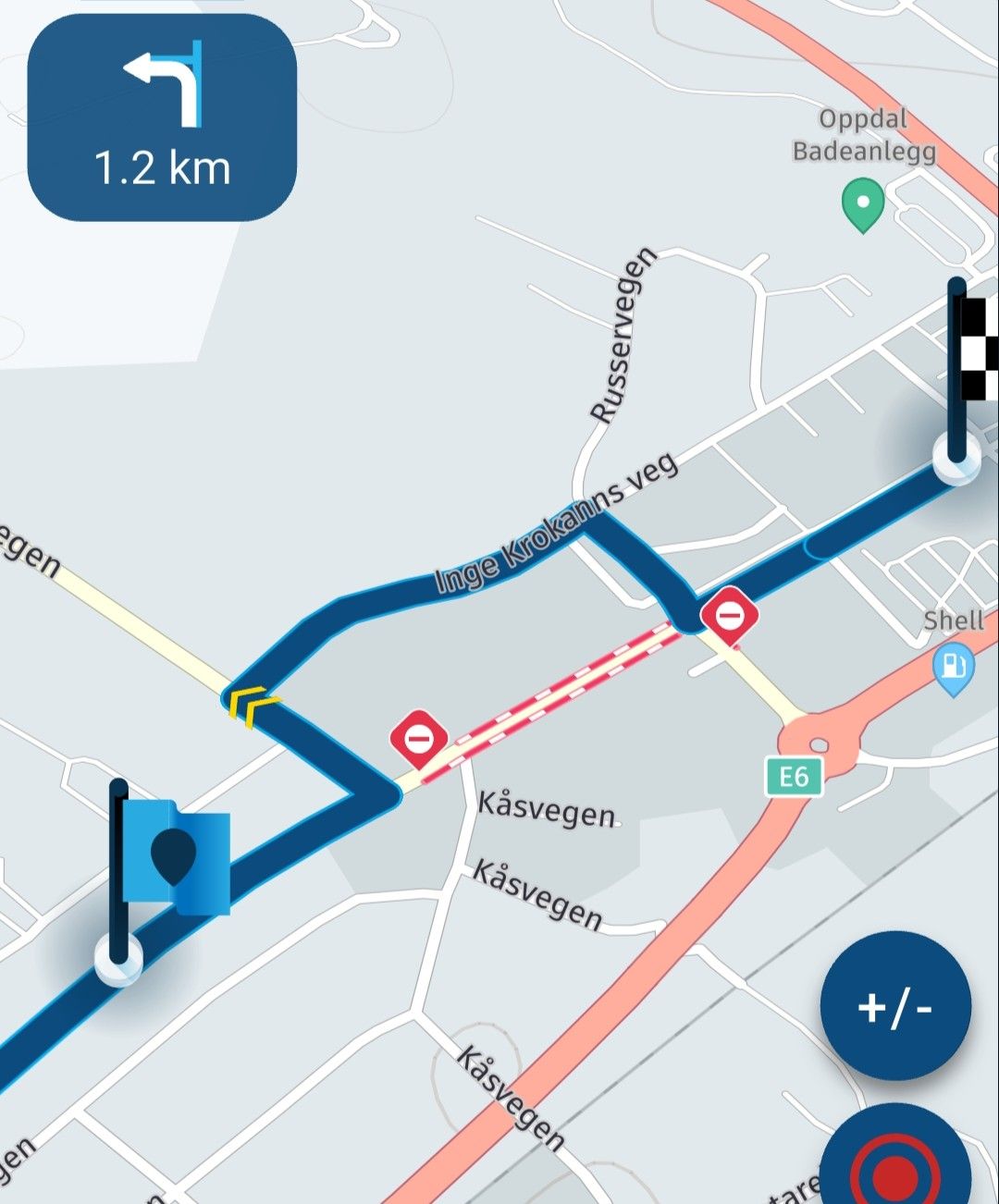
The 2nd and 3rd show what I can see during navigation (route as track). Sometimes the 2nd, sometimes the 3rd.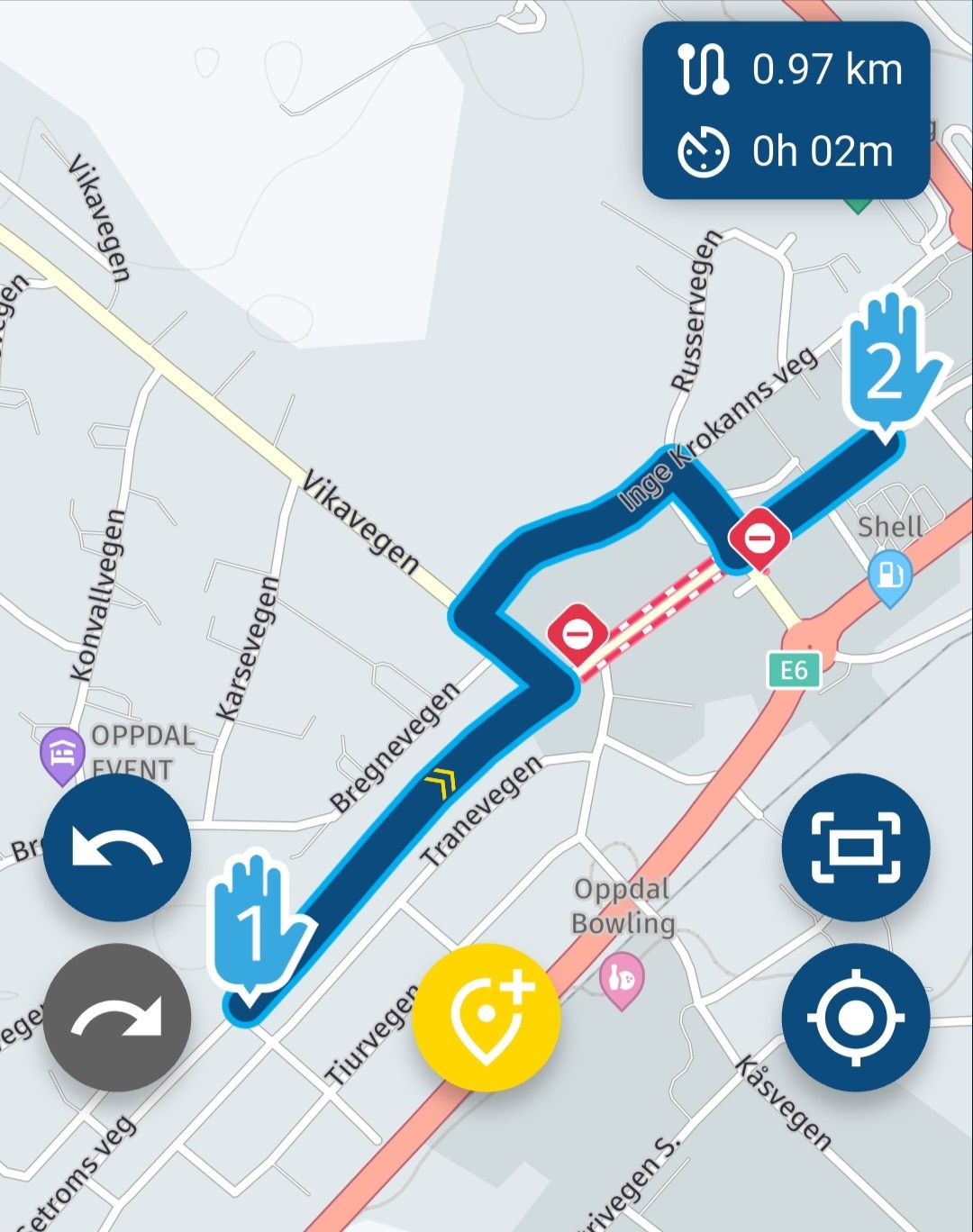
-
@Con-Hennekens not sure what you mean, but all what I am after is consistency. Ignoring closures might be the right thing to do but then i would like to see the same in the in-app route editor, without having to sprinkle my route with waypoints which don't represent anything and without having to change some settings between editing and navigating. The in-app editor is the only editor I ever use.
The images below illustrate the issue.
The first one shows my mini test route in the editor.
The 2nd and 3rd show what I can see during navigation (route as track). Sometimes the 2nd, sometimes the 3rd.
@Herman-Veldhuizen, Thanks for clarification. Do I understand correctly that one is opened direfrom the route menu, and the other from the in-app planner? Interesting...
I am just an enthusiastic MRA user, and hope you will be one too!
Most motorcycle problems are caused by the nut that connects the handlebar to the saddle.
Check out RideSleepRepeat.eu, a biker community for sharing stays across Europe
-
@Herman-Veldhuizen, Thanks for clarification. Do I understand correctly that one is opened direfrom the route menu, and the other from the in-app planner? Interesting...
@Con-Hennekens correct.
The first one (2nd picture) from the opening page of the route (select route, navigate).
The second one (3rd picture) from the in-app editor (select route, edit, navigate).
Corjan had a look at it but I am not sure what the conclusion was.
I dont often start the navigation from the editor but in this case it would actually best match what I see during planning. -
@Con-Hennekens correct.
The first one (2nd picture) from the opening page of the route (select route, navigate).
The second one (3rd picture) from the in-app editor (select route, edit, navigate).
Corjan had a look at it but I am not sure what the conclusion was.
I dont often start the navigation from the editor but in this case it would actually best match what I see during planning.
@Herman-Veldhuizen, I must say I do not use the in-app planner a lot, so I never noticed this difference. I am afraid I cannot add much to this if Corjan is already looking at it...
I am just an enthusiastic MRA user, and hope you will be one too!
Most motorcycle problems are caused by the nut that connects the handlebar to the saddle.
Check out RideSleepRepeat.eu, a biker community for sharing stays across Europe
-
@Herman-Veldhuizen, I must say I do not use the in-app planner a lot, so I never noticed this difference. I am afraid I cannot add much to this if Corjan is already looking at it...
@Con-Hennekens if you want to try it :
View 'maasland' in MyRoute-app! https://www.myrouteapp.com/route/open/13720793
-
@Con-Hennekens if you want to try it :
View 'maasland' in MyRoute-app! https://www.myrouteapp.com/route/open/13720793
@Herman-Veldhuizen, actually I am getting the same detour in both cases...
I am just an enthusiastic MRA user, and hope you will be one too!
Most motorcycle problems are caused by the nut that connects the handlebar to the saddle.
Check out RideSleepRepeat.eu, a biker community for sharing stays across Europe
-
@Herman-Veldhuizen, actually I am getting the same detour in both cases...
@Con-Hennekens so do i if i navigate as route. if i navigate as track i get 2 versions
-
@Con-Hennekens so do i if i navigate as route. if i navigate as track i get 2 versions
@Herman-Veldhuizen, ah yes, I see what you mean. But actually I find that rather logical. "Navigate route as track" only kicks in when you start navigating. By opening the route (it's not a track!) in the planner, the route already changes to create the detour. Then you start navigating that changed route as track, so it includes the detour. When you do NOT open it in the planner first, you navigate the unchanged route as a track, and you know a track won't change due to traffic. So I can imagine that Corjan's conclusion was: "it's by design"
-
I guess it makes sense for those who know the internals of the app. I struggle to see that it makes sense for an average user. The fact that the user brings up an editor (or not) before riding should make no difference in what the navigation comes up with.
In other words : the sequence open-edit-navigate is now very different to
open-edit-save-open-navigate ! This even without making one change.You must agree with me that when I spent an hour or so in the inapp editor to make or check the route that I expect the route to look the same when I press navigate directly after (from the opening page of the route). Currently this isn't the case when navigating a route (with closures) as track.
I believe that people choose route-as-track because they like the stability of the track. In one way this is now the opposite. The stability is there during navigation but not in the time period between planning the route and riding.
In the end it boils down to this: when should the track be created? I sort of feel that it should be created when the route is created/edited and saved. Of coarse when roads change or close/reopen this track becomes out of date. This I understand and I would accept that I would have to revisit the route with a newer map to get an up to date track.
If I had a way to see the track in the in-app editor I would be happy too (i think) because then at least I can see where the app will take me when riding. As far as I know this isnt possible now.
-
I guess it makes sense for those who know the internals of the app. I struggle to see that it makes sense for an average user. The fact that the user brings up an editor (or not) before riding should make no difference in what the navigation comes up with.
In other words : the sequence open-edit-navigate is now very different to
open-edit-save-open-navigate ! This even without making one change.You must agree with me that when I spent an hour or so in the inapp editor to make or check the route that I expect the route to look the same when I press navigate directly after (from the opening page of the route). Currently this isn't the case when navigating a route (with closures) as track.
I believe that people choose route-as-track because they like the stability of the track. In one way this is now the opposite. The stability is there during navigation but not in the time period between planning the route and riding.
In the end it boils down to this: when should the track be created? I sort of feel that it should be created when the route is created/edited and saved. Of coarse when roads change or close/reopen this track becomes out of date. This I understand and I would accept that I would have to revisit the route with a newer map to get an up to date track.
If I had a way to see the track in the in-app editor I would be happy too (i think) because then at least I can see where the app will take me when riding. As far as I know this isnt possible now.
@Herman-Veldhuizen, I agree with all you say, but I fail to see that it is any other way as it is
When you edit a track in the in-app planner, the traffic info is already there, and what I see when I start navigating is exactly as it was in the editor. The only change is there when you did NOT load it in the editor, and in that case you will not notice a change because you did not open it in the editor.
You say that you don't change anything, but actually by opening a route it get's recalculated. That has always been that way and will always be. That's in this case where the change happens, and a new track is calculated. In the end it is still a route, not a track.
I very much agree that tracks are chosen for stability. For that reason I am all for a feature that converts a route to a track (without export/re-import), so people actually navigate a track instead of a "route as track".
I guess it makes sense for those who know the internals of the app. I struggle to see that it makes sense for an average user.
Yes I can imagine that, but that's why we are trying to help out
-
Most of the time I start the navigation from the opening page. I dont edit my routes often. So if there were closures during editing i will be surprised where the app sends me too (assuming the closure are still there). Again when there are few roads, one closure can have a big impact.
But what about my suggestion to display both the route and the track in the in-app editor when I have have route as track enabled? We see both when navigating so I assume it is technically possible.
pure track navigation is no option for me. the ETA info to waypoints is the most important feature for me.
Hello! It looks like you're interested in this conversation, but you don't have an account yet.
Getting fed up of having to scroll through the same posts each visit? When you register for an account, you'll always come back to exactly where you were before, and choose to be notified of new replies (either via email, or push notification). You'll also be able to save bookmarks and upvote posts to show your appreciation to other community members.
With your input, this post could be even better 💗
Register Login
-
 122471
-
010136
-
 010205
-
05102
-
0466
-
0455
-
 0342
0342
-
05103